Portfolio of Brad Grabowski
Designing products, teams, and systems that create business impact.

I’m a product design leader who works at the intersection of customer needs, business strategy, and technology. I believe great design starts with understanding the right problem, then bringing design, product, engineering, and research together to solve it. My focus goes beyond shipping features. I help shape product direction, simplify complex enterprise experiences, build design systems, and connect design decisions to meaningful customer and business outcomes.
As a leader, I create clarity, set a strong quality bar, and give designers the context and ownership they need to do their best work. I stay close to the craft without becoming the approval layer, and I see design systems, research, and strong cross-functional partnerships as ways to make good design repeatable across an organization. As AI changes how we build and interact with software, I’m also focused on designing experiences that use AI thoughtfully, increasing what people and teams can accomplish while preserving trust, judgment, and control.
Companies I have worked with












How I Lead
My approach to design leadership is built around creating clarity, developing strong teams, and connecting design decisions to customer and business outcomes. These principles guide how I work with designers, product teams, engineers, researchers, and leadership, while staying close enough to the craft to understand the problems we’re solving.
1. Start with the problem, not the solution
“Great design starts with understanding what needs to change and why, before deciding what to build.”
2. Design is a partner, not a service
“Design should help shape what gets built, not simply make requirements easier to use.”
3. Create clarity, then give people ownership
“Give people the context and expectations they need, then trust them to make strong decisions.”
4. Build systems that make good design repeatable
“Good design shouldn’t depend on the right designer being in the room. Build systems that help teams produce it consistently.”
5. Design for impact
“Design succeeds when customer needs, business goals, and meaningful outcomes come together.”
6. Use AI to increase capability, not replace judgment
“Use AI to expand what people can accomplish, while keeping human judgment, trust, and control at the center.”
7. Stay close to the work without becoming the bottleneck
“Stay close enough to understand the work and maintain quality, but far enough away to let people own it.”

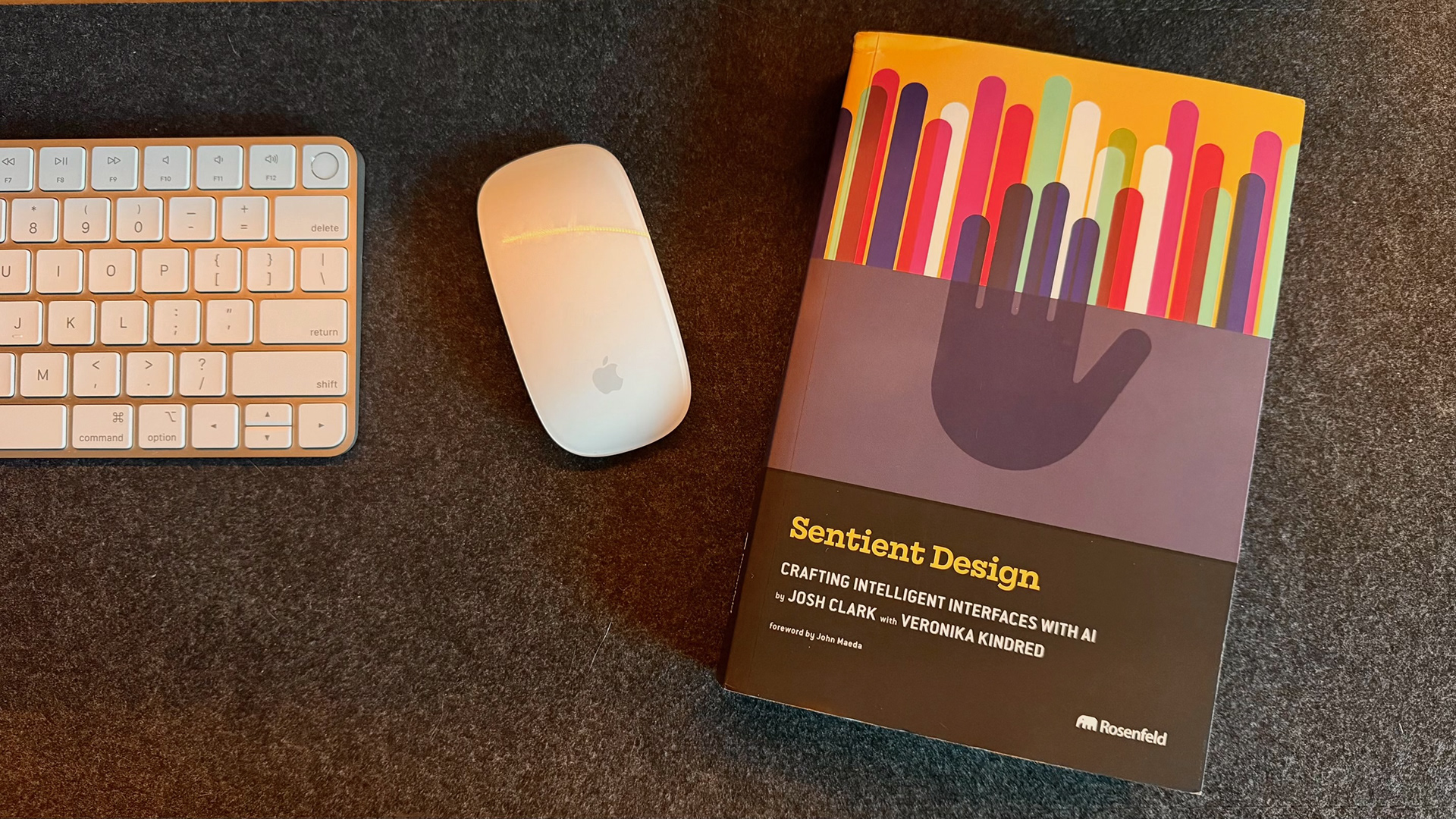
Currently reading
Sentient Design by Josh Clark and Veronika Kindred
Sentient Design by Josh Clark explores how AI changes product design from creating interfaces that respond to commands to designing systems that understand intent, adapt to context, make recommendations, and increasingly take action on a user's behalf. Clark argues that designers must think beyond screens and flows to define AI behavior, including how much agency a system should have, how it communicates uncertainty, how users maintain control, and how trust develops over time. The central idea is that successful AI products should create a thoughtful partnership between people and intelligent systems, using AI to increase human capability while preserving judgment, transparency, and control.