
Product Designer, member of a 4-person product design team at Shipwell, a freight management and logistics technology platform
Focus area: Pricing Intelligence (market rate transparency, contract benchmarking, and predictive pricing)
Overview
At Shipwell, I worked as part of a four-person product design team on Pricing Intelligence, a suite of tools that gave freight shippers real-time and historical visibility into market rates so they could negotiate better contracts, evaluate carriers fairly, and time shipments around market conditions. Freight pricing is notoriously opaque: rates shift by lane, season, and carrier, and shippers have traditionally had to rely on gut instinct or slow manual research to know whether they were getting a fair deal. Our work brought that pricing data into the product itself, turning a black box into something shippers could see, compare, and act on.
The Problem
Shippers negotiating freight contracts were operating with incomplete information. Contract rates were set and then left alone, even as the spot market moved above or below them. Comparing a carrier's rate to the broader market meant pulling data from multiple outside sources by hand, and there was no easy way to tell whether a rate increase from a carrier was reasonable or an overcharge. On top of that, freight costs move with the seasons (produce season, holiday retail volume, weather-driven capacity crunches), and most shippers had no structured way to anticipate those swings before they hit.
In short: pricing decisions that affected real margin were being made without the visibility to make them well.
My Process
I worked closely with internal stakeholders and external customers to understand where the pain actually lived: not just what the market data could theoretically show, but where in a shipper's day-to-day workflow that data needed to surface to actually change a decision. That meant sitting with the complexity of freight pricing (spot rates, contract rates, lane-level history, carrier performance) and figuring out where simplification would help versus where the goal was transparency, showing the underlying complexity clearly rather than hiding it.
A recurring theme in the work was translating a genuinely complex logistics process into something a non-analyst could use confidently: identifying which comparisons mattered most (contract vs. market, prior paid vs. current), and designing views that made an answer obvious rather than something the user had to calculate themselves.
The Solution
Pricing Intelligence shipped as a few connected capabilities:
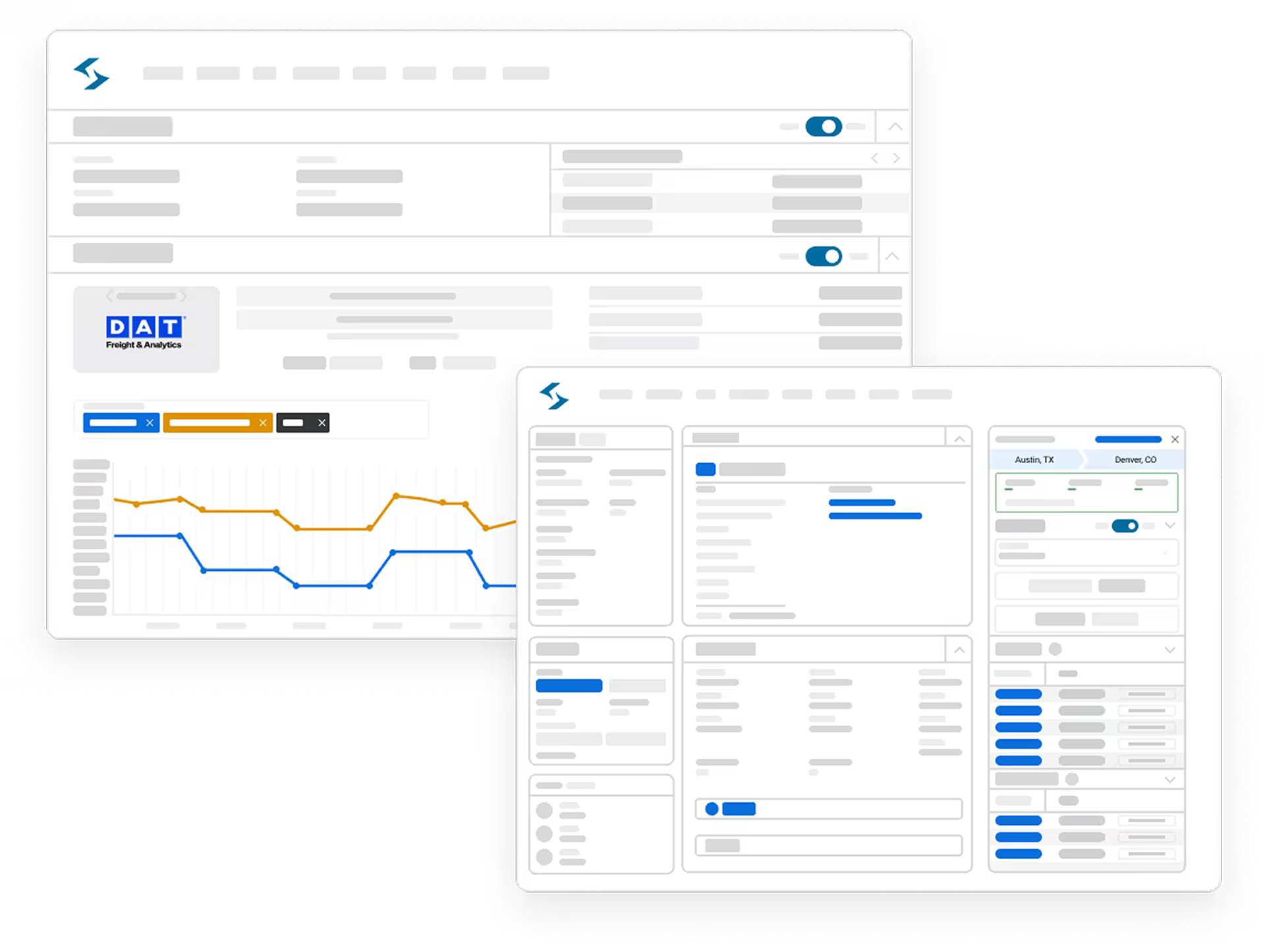
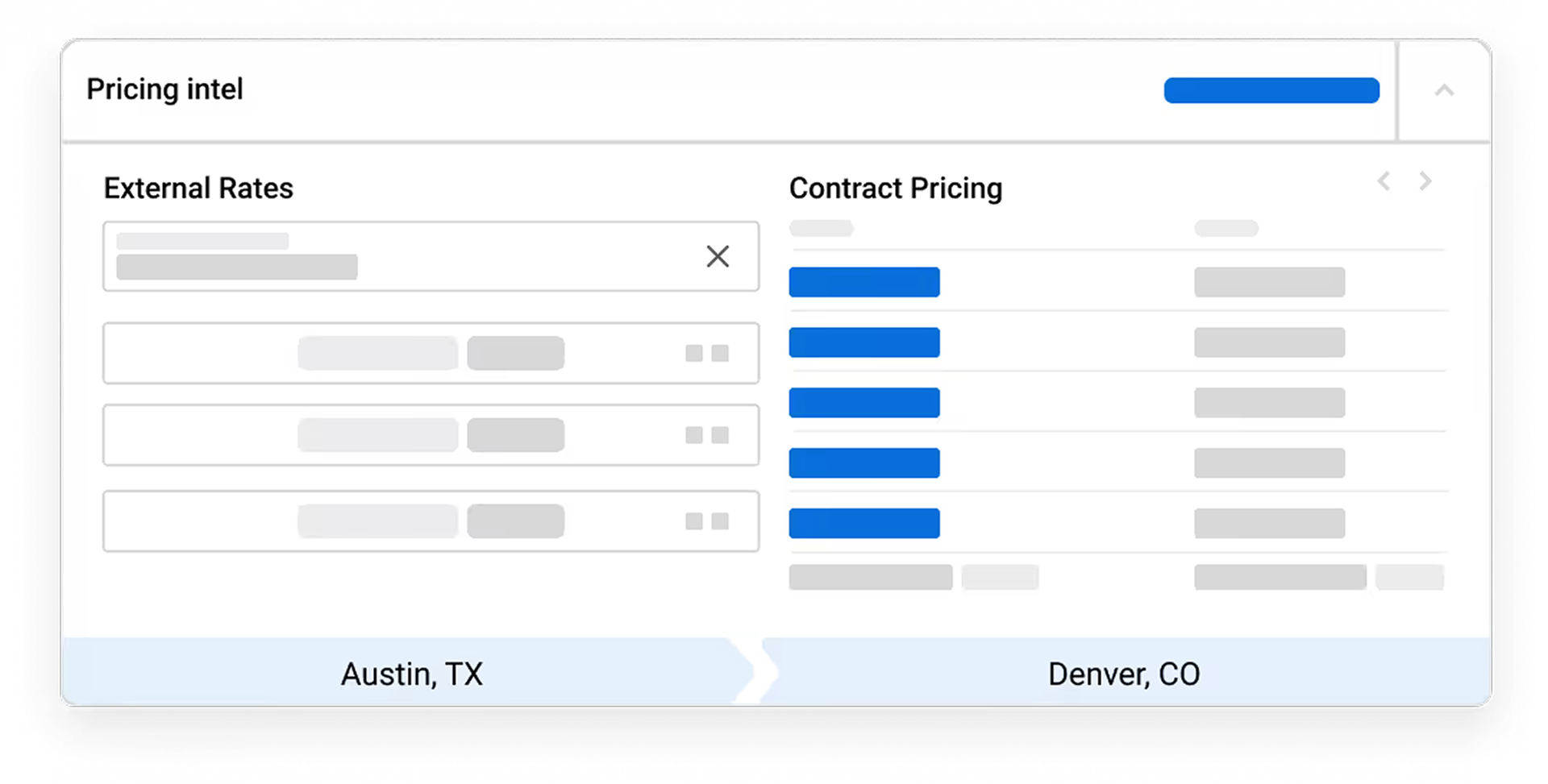
Dynamic pricing visibility. Real-time spot rates and historical rate data, pulled from partners including DAT Freight & Analytics, Truckstop, and FreightWaves SONAR, so shippers could compare their own contract rates against the broader market rather than negotiating blind.
Historical lane insights. Carrier performance and prior-paid-rate history by lane, so shippers could spot cost-saving opportunities and track how market trends were affecting their own shipping costs over time.
Contract benchmarking and actionable analytics. Tools that told shippers when it made sense to reprice a contract, switch carriers, or negotiate a spot rate, based on how their current rates compared to the live market.
Predictive pricing. The piece I'm most proud of. This was AI before "AI" was the industry's word for it: a forecasting model that helped customers anticipate market conditions and seasonal shipping spikes, so they could time shipments and make informed decisions before costs moved against them, rather than reacting after the fact.
Impact
Pricing Intelligence gave shippers a defensible answer to a question they'd previously had to guess at: is this a good rate?By surfacing market benchmarks, historical trends, and predictive signals directly in the product, we shifted pricing decisions from reactive and manual to informed and proactive, reducing the risk of overpaying carriers and giving customers leverage in negotiations they'd previously entered with far less information than the carriers themselves.
Reflection
This project shaped how I think about designing for complex, data-heavy domains: the goal usually isn't to hide complexity but to structure it, deciding deliberately which comparisons a user needs to see clearly and which details can stay in the background until they're needed. Working on predictive pricing specifically gave me an early, practical education in designing for probabilistic, forecast-driven data well before "AI-powered" became a design category of its own.